Margherita Belgioioso,
PhD
Associate Professor of Quantitative
International Relations
School of Politics and International Studies, University of Leeds

Margherita Belgioioso, PhD
School of Politics and International Studies
University of Leeds
Woodhouse, Leeds LS2 9JT UK
Teaching Excellence

Methodological Modules
- 2025-2026. Causal reasoning and quantitative evidence (PhD) University of Leeds
- 2023-2026. Approaches to Analysis (BA) University of Leeds
- 2024-2025 Applied Statistics for Political Science (MSC) University of Leeds
- 2019-2020 Research Design in IR (BA) University of Kent
- 2018 Research Design and Qualitative Methods in Politics (BA students) Brunel University London
- 2017 Pooled Time Series Cross-Sectional Analysis’ (BA, MA, PhD laboratory) Essex Summer School in Social Science Data Analysis and Collection, University of Essex
- 2015 Modelling Heterogeneity in Cross-Sectional Panel Data’ (BA, MA, PhD) University of Essex
Substantive Modules
- 2025-2026 Counterterrorism (MSC/MA) University of Leeds
- 2023-2025 Terrorism (MA) University of Leeds
- 2022-2023 Terrorism (BA) University of Leeds
- 2022-2023 Security Studies (BA) University of Leeds
- 2021-2022 Conflict resolution and world politics (MA) University of Kent
- 2021-2022 International conflict and cooperation (BA) University of Kent
- 2020 Outcomes of Non-Violent Civil Resistance (PhD) PRIO
- 2019 Civil Wars (MA) Scuola Superiore Sant’Anna di Pisa (in English)
- 2018-2019 Terrorism Analysis (BA students) Brunel University London
- 2017-2018 International Security (MA students) Brunel University London
- 2017-2018 International Relations Theories (BA students) Brunel University London
- 2016 Conflict Analysis (BA seminar) University of Essex
- 2015 International Relations Theories and Approaches (BA seminar) University of Essex
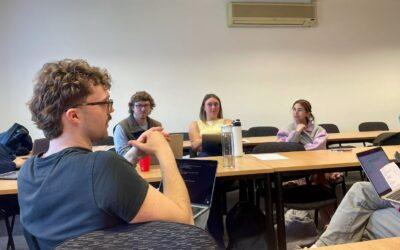
Simulation: The Foreign Fighters Coordination Summit
Objective This simulation helps students understand why international cooperation on counterterrorism is often inconsistent and fragmented. Students experience how sovereignty, political incentives, and institutional limitations shape international decision-making....
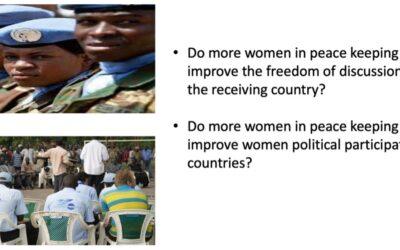
Students’ Involvement in Research
Reading groups to identify research gaps (see pictures below from reading group in 2020 at the university of Kent) Coding new data PGR Students presentations
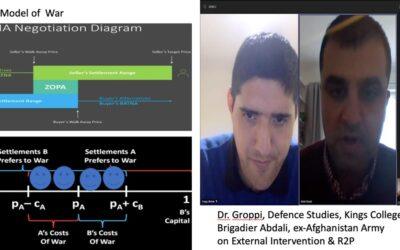
Demonstrations
Peace Processes Negotiations simulations Engagement with Practitioners
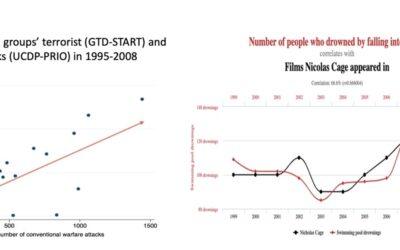
Simulations
Hands on descriptive statistics Datasets exploration